Combining MRI, biomarkers, cognitive testing and more to analyse the brain.
Early detection is crucial. The earlier you detect and diagnose MCI, the better.
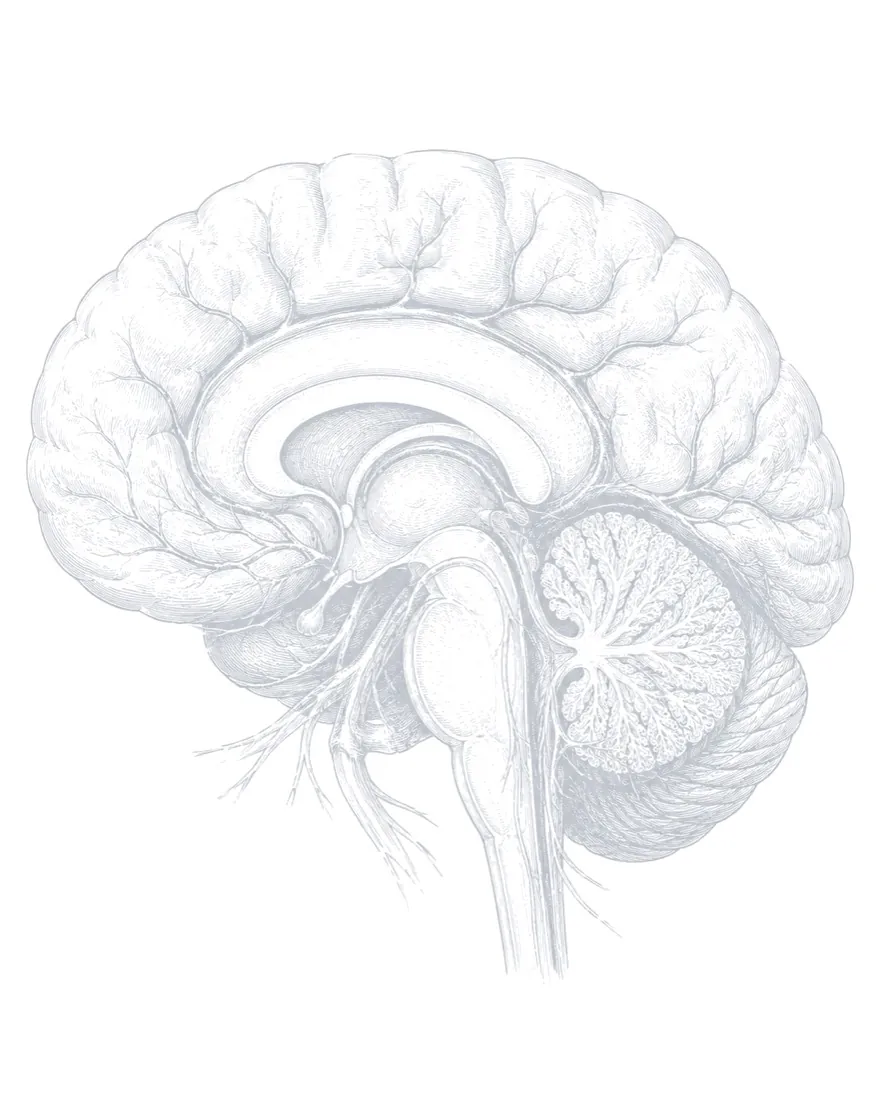
Brain health can't be reduced to a single value. Imaging, biomarkers, cognitive tests and lifestyle factors are weighed together into one overall assessment.
Objective measurement of the brain's structures in cubic millimetres, validated and comparable over time.
A standardised, repeatable measure of cognitive performance.
A blood marker (p-tau) read alongside the rest of your results.
Metabolic and vascular markers that can be relevant for how your brain ages.
The lifestyle factors that can influence how the brain ages.
Time with a physician who takes you through your results and what they mean.
“It seems if you wait until later life to intervene it’s too late, the damage that has been done is really irreversible.”

Your brain is your most valuable asset, yet it is rarely part of a routine health check. With the latest brain science, we can now identify signs of brain ageing long before any symptoms appear.
We introduced quantitative brain analysis back in 2023. Instead of subjective assessment, the brain's structures are measured objectively, down to the cubic millimetre.
Over eight hundred people assessed. Each visit becomes a baseline we can measure against.
For many of our clients we now hold several years of follow-up data. Change becomes something we can measure, not something we have to guess at. Every analysis is reviewed by a specialist-trained neuroradiologist.
Executive Health has been working with advanced brain imaging and quantitative brain measurements since 2023. Our assessments are based on established clinical methods and are complemented by modern AI-assisted analysis, blood-based biomarkers, and specialist expertise in neuroradiology and cognitive medicine.
The program combines multiple sources of information to create a comprehensive picture of brain health. Rather than relying on a single test result, findings from imaging, biomarkers, cognitive testing, medical history, and lifestyle factors are evaluated together to identify meaningful patterns and changes over time.
This approach allows us to establish an objective baseline, monitor brain health longitudinally, and, when appropriate, provide a foundation for further medical evaluation by specialist clinicians.
“The idea that dementia prevention may hinge on what people do in their mid-30s to their 60s is rapidly reshaping the field. Scientists increasingly believe the disease is driven not only by changes in the aging brain, but also by years of metabolic stress, inflammation and vascular damage accumulating across the body.”